Crappie Fishing in Alba - Lake Fork Guided Trip
Crappie Fishing in Lake Fork - What to Expect

Guided Fishing Trip by Guide Curtis Keller in December

- Top Lake Fork Crappie Fishing Guide! Book Now!


Summary
Join a guided fishing trip on Lake Fork in Alba, Texas, where crappie fishing delivers consistent action and genuine connection to the water. On Thursday, May 23rd, anglers discover why this lake has earned its reputation among crappie enthusiasts, combining productive fishing grounds with the expertise of local guides who know every productive structure and seasonal pattern.
Crappie Fishing with Curtis Keller - Rates & Booking
Guide Curtis Keller of Crappie Curtis Guide Service takes anglers out on Lake Fork, delivering the kind of hands-on guided fishing trip where technique and local knowledge combine to produce real results. Thursday, May 23rd represents a typical day on the water - the kind where patience meets precision and structure holds the fish that matter.
Lake Fork's reputation for quality crappie fishing rests on consistent populations and the guide's ability to locate active fish throughout the day. Curtis brings years of local expertise to every outing, understanding how seasonal patterns, water conditions, and available cover work together to create opportunity. Whether you're targeting spawning aggregations, schooling crappie in deeper water, or working shallow cover during low-light periods, the guided approach gives anglers access to proven techniques and premium fishing grounds.
To book your guided fishing trip or inquire about current rates and availability, contact Crappie Curtis Guide Service directly. Experienced guides stand ready to match conditions with strategy, ensuring your time on the water produces both action and skill development.
Highlights of Lake Fork Crappie Fishing
Lake Fork delivers consistent crappie opportunities across multiple seasons, with spring spawning periods and fall transitions offering peak action. The lake's structure - fallen timber, channel ledges, and shallow vegetation - creates ideal crappie habitat. Morning and evening sessions often produce aggressive feeding behavior, while midday fishing rewards patient anglers working deeper structure with precision casting and live-bait presentation.
The experience extends beyond the catch. Dawn breaks over calm water, mist rising from quiet coves where cypress trees stand sentinel. Throughout the day, the lake's rhythm becomes apparent - the subtle pull of a crappie on light line, the satisfaction of working a new fishing ground, the genuine expertise that guides bring to every decision about where and how to fish.
Local Species Insights: Crappie
Crappie represent one of North Texas's most sought-after freshwater species, and Lake Fork stands as a premier destination for both white and black crappie. These panfish thrive in structure-rich environments, congregating around submerged timber, rock formations, and channel breaks where they hunt small baitfish and crustaceans.
Lake Fork's crappie exhibit classic behavioral patterns. During spring months, they move into shallow water to spawn, creating windows of exceptional opportunity near shoreline cover and shallow flats. As water temperatures climb through summer, the bite shifts deeper, following the thermocline into cooler water where crappie suspend around submerged trees and ledge systems. Fall brings renewed shallow-water activity as cooling temperatures push fish back toward vegetation and structure in 8-15 feet of water.
Successful crappie fishing demands precision and patience. Light spinning tackle, small crankbaits, and live minnows rank among proven approaches. The key lies in understanding where crappie hold relative to cover, then placing offerings close enough to trigger response without spooking fish in clear water. Guided trips amplify this knowledge base, putting experienced eyes on water conditions and concentrating effort on productive zones rather than random exploration.
The crappie's appeal transcends size. While trophy fish do emerge from Lake Fork, many anglers prize these panfish for the sheer consistency of action they provide. Days often yield double-digit catches of 9-12 inch fish - respectable size that fights hard on appropriate tackle and delivers genuine satisfaction. The species rewards both technical skill and strategic thinking, making guided experiences valuable for developing broader fishing competency.
Lake Fork's crappie populations benefit from active management and natural reproduction. The combination of suitable habitat, available forage, and guided access creates sustainable opportunity where anglers experience genuine connection to the fishery rather than random chance.
Fishing in Lake Fork: Crappie
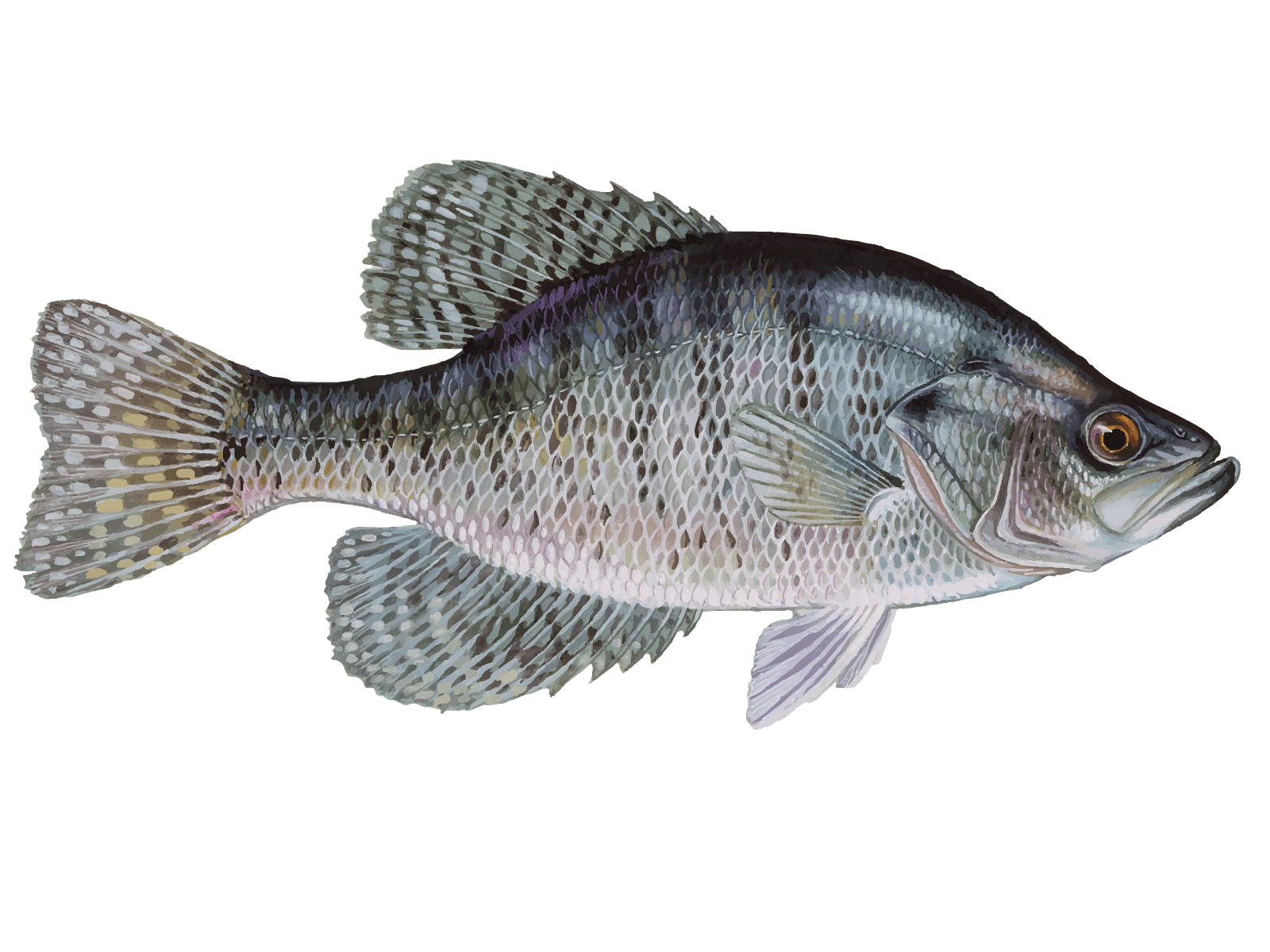
Crappie Overview
If you're looking for a scrappy, schooling game fish that's both fun to catch and delicious to eat, the Crappie (scientific name Pomoxis nigromaculatus for Black Crappie, Pomoxis annularis for White Crappie) is your answer. Belonging to the family Centrarchidae and order Perciformes, crappies are among the largest panfish in North America and are beloved by anglers from Mississippi's Grenada Lake to backyard ponds across the continent. What makes them special? Their distinctive appearance—Black Crappies sport a speckled pattern earning them the nickname 'specks,' while White Crappies display vertical bars—combined with their tendency to school together and their white, flaky, delicious meat make them an irresistible target for both recreational and food-oriented anglers.
Crappie Habitat and Distribution
Crappies are native to Canada and eastern North America, thriving throughout the Great Lakes, Hudson Bay, and Mississippi River Basins. You'll find them in rivers, lakes, and quiet backwater pools, preferring shallow waters where they can hide among vegetation, fallen trees, submerged bushes, and other cover. While both Black and White Crappies share similar habitats, Black Crappies tend to favor clearer water, whereas White Crappies are more adaptable to murky conditions. Major hotspots include Grenada Lake and Reelfoot Lake in Mississippi, where giant specimens are regularly caught. Their widespread distribution means excellent crappie fishing opportunities exist across North America, from urban reservoirs to remote wilderness lakes.
Crappie Size and Weight
Most Crappies you'll encounter measure between 7 to 12 inches and weigh roughly 0.5 to 1 pound—perfect panfish size for a satisfying meal or a fun afternoon of casting. However, trophy hunters shouldn't be discouraged; these fish can grow considerably larger. The size range for Crappies extends from a minimum of 4 inches up to an impressive 19 inches, with weights reaching up to 5 pounds in premier fishing destinations. The variation in size often depends on habitat quality, food availability, and fishing pressure in your region. Younger, schooling Crappies in crowded waters tend toward the smaller end, while isolated or well-managed populations produce the true giants that justify a special fishing trip.
Crappie Diet and Behavior
Crappies are opportunistic feeders with tastes that shift as they grow. Young Crappies consume zooplankton and small crustaceans, while juveniles graduate to insects and larvae. Mature fish add small minnows, threadfin shads, gizzard shads, and even the fry of other game fish to their diet. One of their most fascinating behavioral traits is their schooling nature—Crappies travel and hunt in loose to tight schools, making for explosive action when you locate a pod. They're also crepuscular hunters, meaning they're most active at dawn and dusk when light is low. During midday hours, they tend to retreat deeper and become sluggish, so timing your outings accordingly significantly improves your odds. Their less-aggressive daytime behavior contrasts sharply with their evening feeding frenzies, making early morning or late afternoon your best bets for consistent catches.
Crappie Spawning and Seasonal Activity
Crappie spawning season arrives in early spring and summer when water temperatures climb to between 62°F and 68°F—typically April through June depending on your location. During this period, male Crappies build shallow nests in soft or gravelly spots, often near cover. Females lay enormous clutches, depositing between 5,000 and 60,000 eggs per spawning event, which the males fiercely guard. Eggs hatch within 2 to 5 days, and the fry remain under paternal protection until they're large enough to fend for themselves. This spawning window makes spring an excellent time to target Crappies, as they concentrate in predictable shallow zones before scattering into deeper summer habitat. Fall often brings another minor feeding spike as water cools, making September and October secondary peak seasons in many regions.
Crappie Techniques for Observation and Capture
Spin and Jig Fishing: This remains the gold standard for Crappie anglers. Use light tackle with small spinners, crappie-specific jigs, or miniature crankbaits cast along the bottom and structure. Keep your presentation subtle and slow; Crappies have smaller mouths and prefer appropriately sized lures. Work edges near fallen timber, vegetation, and rocky outcrops where schools congregate. Around Mississippi's premier lakes, casting near cypress trees and submerged brush piles consistently produces excellent results. Retrieve steadily but not frantically, allowing the lure to wobble enticingly through the strike zone.
Live Bait and Bobber Rig: One of the most effective and beginner-friendly methods involves rigging live worms or small minnows beneath a bobber. Cast this simple setup near cover, vegetation, or drop-offs and let the current do the work. This passive approach is perfect for patience-testing days and often outproduces active casting during midday slumps. The bobber signals strikes visually, making it ideal for relaxing afternoon sessions or introducing youngsters to angling.
Fly Fishing for Crappie: Don't overlook the excitement of taking Crappies on the fly. Small streamers like the Clouser Minnow are particularly effective, as are soft hackles and nymphs. Dry flies work beautifully on still, calm mornings and evenings. Target the same structure—fallen trees, bushes, and weed edges—from which you'd spin fish. Fly fishing for Crappie is far less challenging than pursuing bass or pike, making it an excellent gateway into the sport for beginners.
Crappie Culinary and Nutritional Notes
Don't let the name fool you—Crappie is genuinely excellent eating and a nutritional powerhouse. The white, flaky meat is delicate and sweet with a flavor profile superior to many popular game fish. They're rich in high-quality protein and packed with omega-3 fatty acids, supporting heart and brain health. Because Crappies are relatively small fish compared to bass or catfish, mercury accumulation in their tissues is minimal, making them a safer choice for frequent consumption. When cooked properly—whether grilled, fried, baked, or poached—Crappie develops a tender, almost buttery texture that requires minimal preparation to shine. Their smaller size means quick, uniform cooking and minimal waste. Many regional cuisines, particularly in the South and Midwest, feature Crappie as a prized table fish, often pan-fried whole or filleted for classic fish fries.
Crappie Frequently Asked Questions
Q: What is the best bait or lure for catching Crappie?
A: Live minnows and worms under a bobber are classic choices that rarely fail. For lures, small jigs (1/16 to 1/8 ounce), crappie spinners, and miniature crankbaits excel. The Clouser Minnow fly is legendary for its effectiveness even on sluggish fish. Match your bait size to the Crappie's small mouth—not too large, not too small—and focus on structure like fallen trees and vegetation.
Q: Where can I find Crappie near major fishing regions like Mississippi?
A: Grenada Lake, Reelfoot Lake, and other major reservoirs throughout the Mississippi River Basin hold populations ranging from abundant to trophy-class. Rivers with backwater pools, quieter impoundments, and clear-water lakes across the Great Lakes region also offer excellent Crappie fishing. Check local regulations and consult regional guides for seasonal access and current conditions.
Q: Is Crappie good to eat, and how should I prepare it?
A: Absolutely. Crappie is considered a delicacy with tender, white, flaky meat and a mild, slightly sweet flavor. Pan-frying whole fish or fillets is popular, as is baking, grilling, and deep-frying. The small size means quick cooking. Its high protein and omega-3 content makes it nutritionally sound for regular consumption.
Q: When is the best time to catch Crappie?
A: Dawn and dusk are prime periods year-round when Crappies feed most actively. Spring (spawning season, April–June) concentrates fish in shallow areas, making them easier to locate. Fall (September–October) brings another feeding flurry as water cools. Midday fishing is possible but requires deeper presentations and patience.
Q: How do I distinguish between Black Crappie and White Crappie?
A: White Crappie display vertical bars along their body and possess 5–6 dorsal fin spines. Black Crappie are speckled overall (no distinct pattern) with 7–8 dorsal spines and a slightly larger mouth resembling a miniature largemouth bass. Black Crappie typically prefer clearer water.
Q: Can I fly fish for Crappie?
A: Yes, and it's highly rewarding. Fly fishing for Crappie is less challenging than pursuing larger game fish, making it perfect for intermediate anglers. Small streamers, soft hackles, nymphs, and dry flies all work well, especially near structure like fallen trees and vegetation. Use light tackle and present your fly calmly to schooling fish.